Now we’re into our next phase, here’s a little summary of what we’ve learned about Frank Zapper treatment (aka radiotherapy)…
Radiotherapy is the use of high energy radiation to treat cancer cells by destroying their DNA and causing cell death. The dead cells are subsequently cleared out by the body. Healthy cells are also affected by the radiation but are able to recover between treatments.
The effects last long after the treatments are administered so the results can only be measured after a number of weeks.
So what does this mean for us? Some things that quite suprised us actually:
Tattoo’s
Plastic moulded foot masks
Drawings all over your leg
Not washing the drawings off (oops)
Lasers
Triangulation
X-rays
25 visits to the K0 department of the LUMC
The first appointment involved a CT scan and X-rays to locate the area to treat.
(Please note appropriately sized trousers for scan!!) 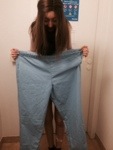
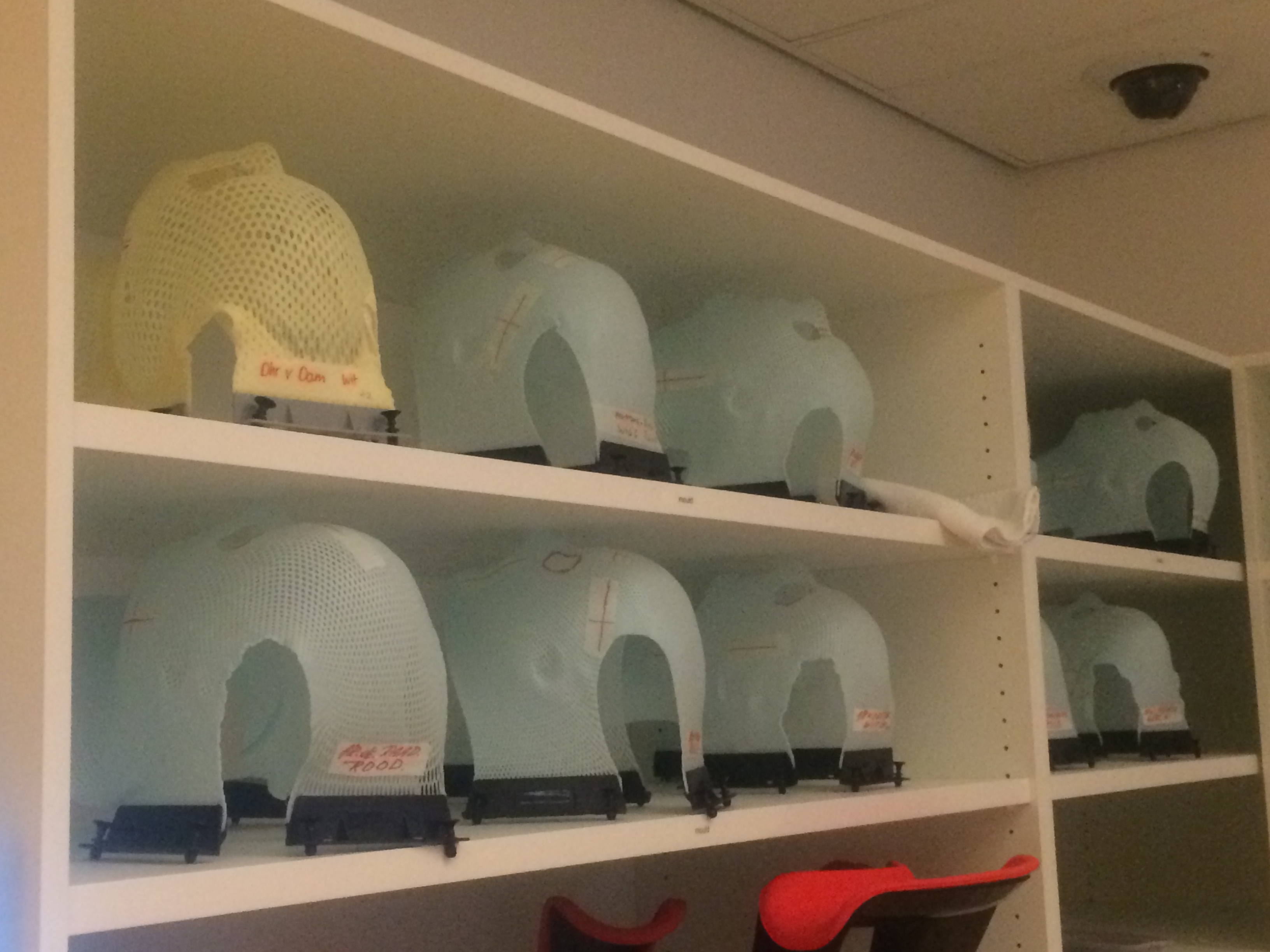
During this appointment three reference points were tattoo’d onto Millie’s leg and lines were drawn along the laser sights used to triangulate the target area. A technician created an individual mould of Millie’s foot that clicks into the bed of the radiotherapy machine. The mould is made from a thermoplastic mesh that becomes malleable when heated and hardens as it cools. The plastic mesh sheet was placed over Millie’s foot while it was hot, clicked onto the table with press stud attachments and then moulded to shape and left to cool.

So by the time they finished, Millie’s leg looked like this:
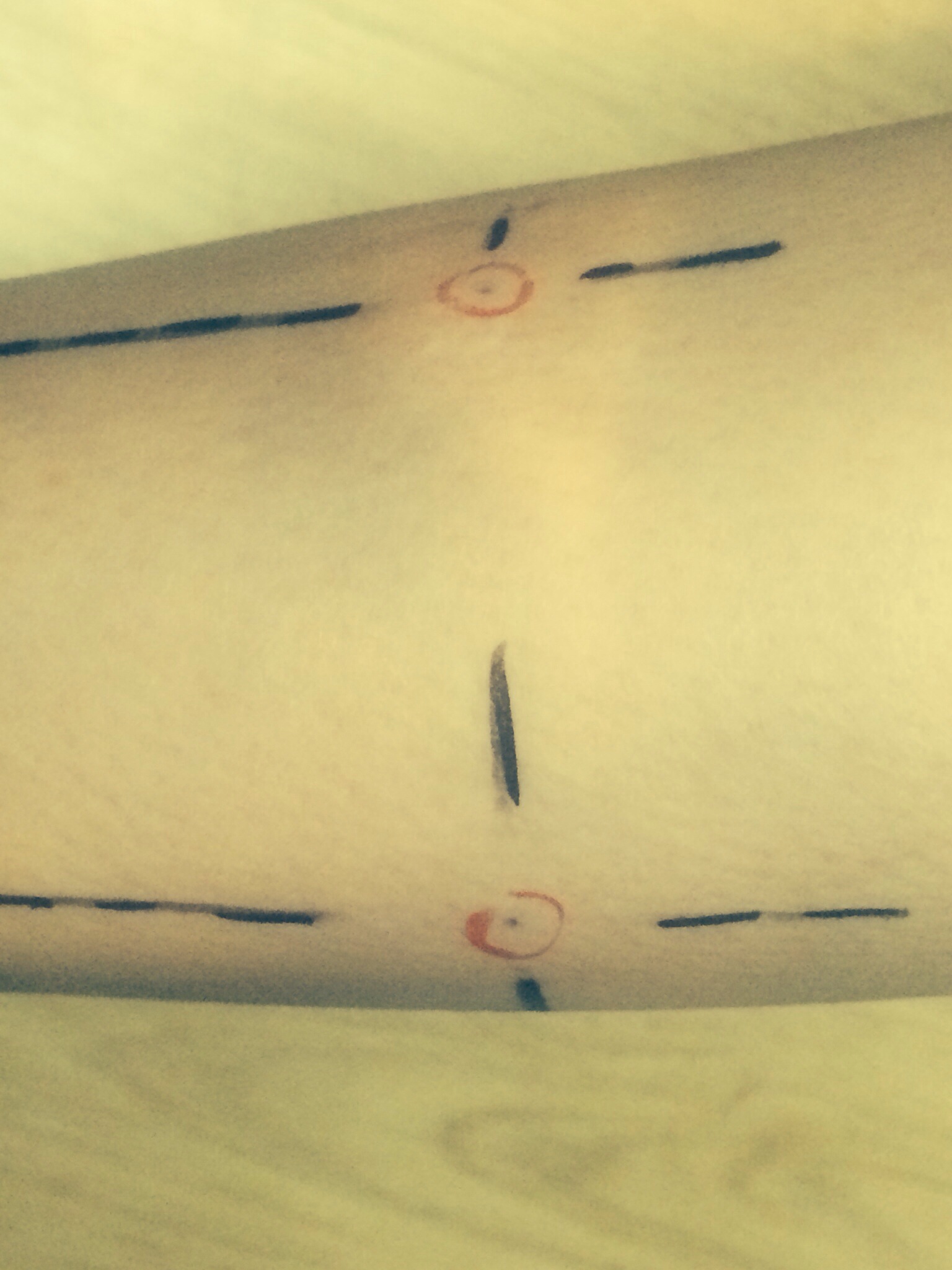

Millie was not best pleased at having 3 tattoo’s she had not been expecting…however, as her best friend Bert has promised to have 3 dots tattoo’d to match, she’s now ok with it all! I shall be able to officially call them the dotty twins..
She was however very pleased she didn’t have to have one of the rather scary head masks on display…
So here’s how clockwork Zapping happens in the LUMC:
We drive 40 minutes to the hospital, park outside the door to the department according to the special rules for radiotherapy patients.
Scan Millie’s appointment card, print out the upcoming appointments and find the waiting room for the machine they will use.
A technician collects us, Millie gets positioned on the bed with her foot in the plastic mould and the lasers are lined up with the tattoo reference points and the drawn lines on the leg.
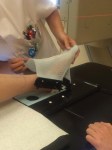
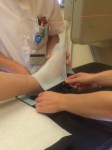


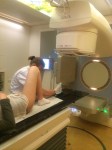
Two technicians check, check and double check.
X-rays are taken from 2 directions and compared with the previous position she was treated in.
If everything lines up, we leave her alone and watch her from the camera’s in the control room.
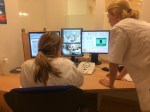
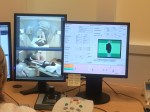
2 minutes. Zap. Zap. Done.
Out again within 10 minutes.
40 minute drive back home.
Radiotherapy can have a number of side effects, both short and long term. The most common short term side effects are:
– Redness specific to the area being treated. (Looks like bad sunburn).
– Swelling (oedema), heavy feeling in the limb.
– Tiredness.
Long term radiotherapy can also cause the treated area of skin to become tougher and discolouration and/or swelling (oedema) can be long term problems.
In order to prevent side effects as much as possible, the area to irradiate was calculated carefully. The main goal was to treat the target area adequately while leaving a section of the lower leg unaffected in order to optimise fluid return both short and long term.
Redness and blistering we got big time unfortunately, but the pictures show clearly the area that was unaffected by the radiotherapy:
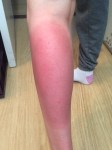
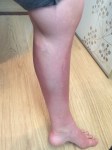
Thankfully after much discomfort, blistering, peeling, pain & bandages – Millie’s leg recovered well from the radiotherapy. The extreme reaction did however delay the operation by three weeks…but that’s for the next post…


 grumpygordon