So here they are; the experts who will extract the remaining nasty *!@#! from Millie’s leg and then reconstruct it beautifully.
Dr. Sander D.S. Dijkstra 
Dr. Dijkstra is the orthopaedic surgeon who specialises in orthopaedic oncology, specifically leg tumours and spinal surgery. He’s a very jolly chap indeed as you can see!
He will be resecting the tumour and carrying out an organic transplant using Millie’s own fibula to replace the piece of tibia he will remove.
As Gordon has shrunk so well, the plan for reconstruction has been adjusted and is now thankfully less aggressive. This means (hopefully) that recovery time will be quicker and time to weight bearing will be shorter as the tibia will only be partially resected.
It is really inspiring to talk to a specialist and hear him speaking so enthousiastically about his work. Organic transplants, titanium transplants, 3D bone printers and state of the art equipment. An operating theatre full of computers. The possibilities themselves represent an incredible range of technical brilliance.
It’s the last place I would want to be, but on the other hand I would LOVE to be in on the surgery!
Thankfully, our super surgeon is currently on holiday with his ‘Charlie’s Angels’ (I quote..!) and has ensured Millie he will return refreshed, relaxed and ready for G-day..
Dr. Dijkstra will be operating together with Dhr. G.K. van Drunen 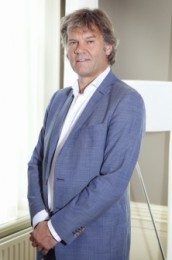
Dr. van Drunen is the plastic surgeon who will put Millie’s leg back together as beautifully as possible. I’ve checked his credentials, I will insist he does beautiful stitching and I shall be inspecting his work carefully!
If I can make some of the places I have to stitch look beautiful then a leg should be a piece of cake…;)
But.
Before G-day arrives we have to get through a number of weeks of radiotherapy.
25 radiotherapy treatments have been added to the schedule as the chance of resecting the entire tumour with an adequate safety margin is increased when radiotherapy is given prior to the operation.
Millie’s tumour is a Ewing sarcoma of the bone but a section of the tumour is in the soft tissue between the tibia and fibula. Bone tumours that are confined to the bone are not treated with radiotherapy. However, if a bone tumour extends into the soft tissue, this element responds well to radiotherapy.
The radiotherapy is administered locally and kills all cells it comes into contact with, both cancer cells and healthy cells alike. The treatment works on the premise that cancer cells are unable to repair and reproduce themselves whereas healthy cells can. Additionally, the radiotherapy causes the tumour to encapsulate which makes removal easier for the surgeon.
So, this is why we will be visiting the LUMC daily for 5 weeks of radiotherapy alongside the continued 3 weekly chemotherapy.
I’m beginning to think we should just set up a tent outside…



 grumpygordon